
Introduction:
Clinical Evaluation Protocol:
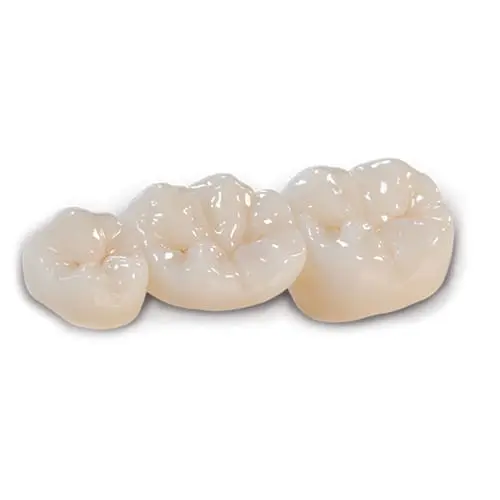
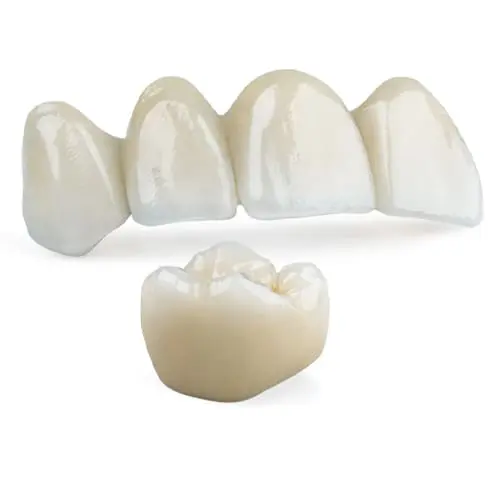
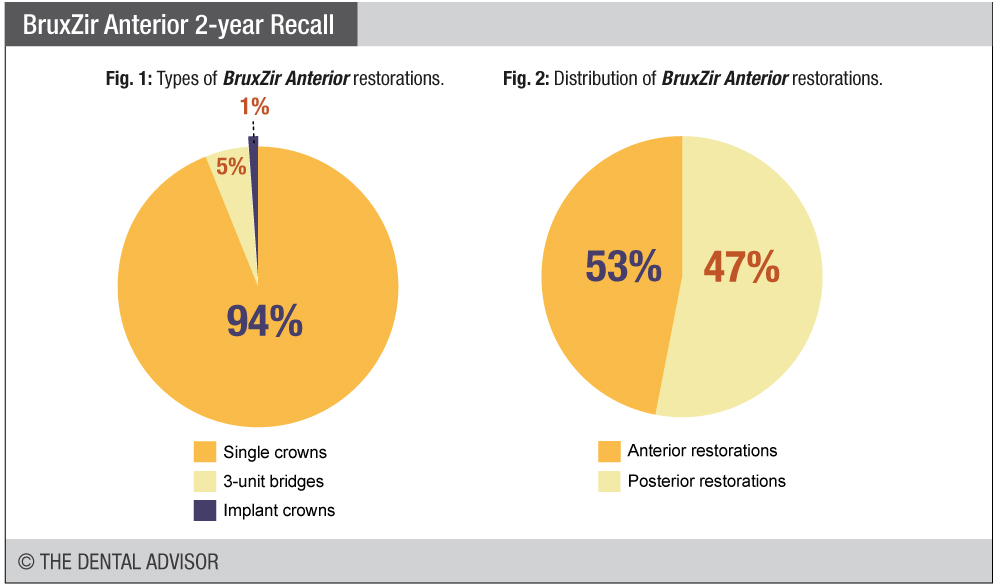
At two years, 278 restorations were available, including anterior and posterior single crowns, implant crowns and three-unit bridges (Figures 1 and 2). Of the posterior crowns, 95% were 1st and 2nd bicuspids, and 5% were 1st or 2nd molars. All restorations were fabricated by Glidewell Laboratories.
Consultant Comments after Placement
- “The crown is beautiful.”
- “The patient’s crowns look really natural.”
- “I have done several 6-8 units of BruxZir Anterior crowns and they all look awesome – the patients are very happy.”
Clinical Results
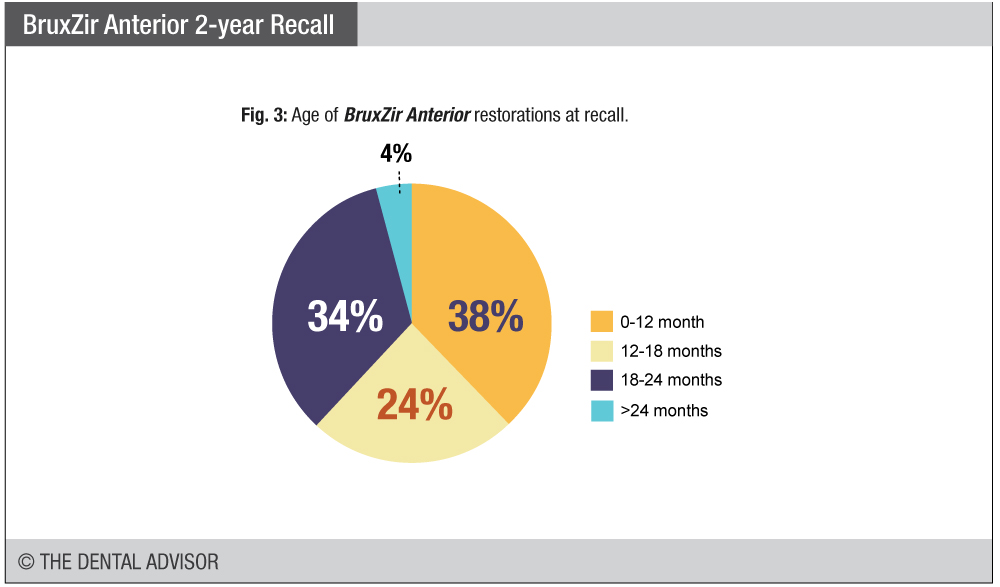
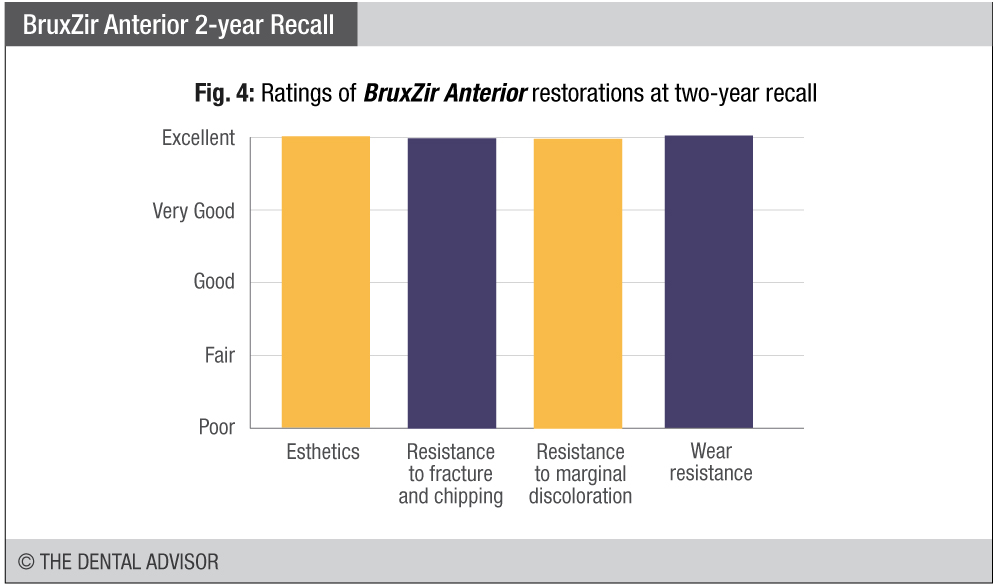
Restorations were evaluated in the following areas: esthetics, resistance to fracture/chipping, resistance to marginal discoloration, and wear resistance on a 1-5 scale: 1=poor, 2=fair, 3=good, 4 = very good, 5=excellent. Of the 278 restorations, 38% had been in function for up to 12 months, 24% for up to 18 months, 34% for up to 24 months, and the remaining 4% for more than 24 months (Figure 3). Ninety-five percent of restorations rated received a rating of 5 or excellent for esthetics (Figure 4). Of the remaining 14 restorations (5%), the majority (11 restorations) received a rating of 4 while the remaining three restorations received a rating of 3. One bicuspid restoration experienced a lingual cusp fracture and another exhibited a mesiodistal cuspal crack. A third bicuspid exhibited excessive microleakage and the restoration was replaced. The mircoleakage is a function of the cement and not the ceramic. At least 99% of restorations received a rating of 5 or excellent for resistance to fracture/chipping, resistance to marginal discoloration and wear resistance.