
Consultants’ Comments
- “Great for use on broad surfaces.”
- “Double bend feature makes applicator adaptable for difficult to reach areas.”
- “This brush is very versatile and can be used for just about anything chairside.”
- “Hub of short brush is bulky.”
Description
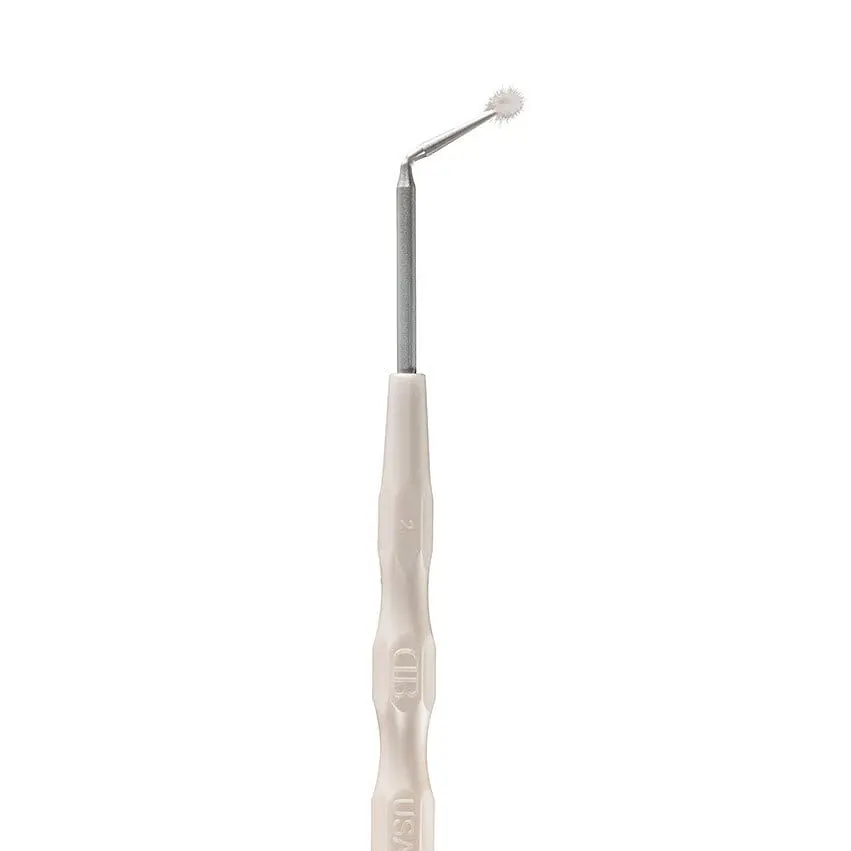
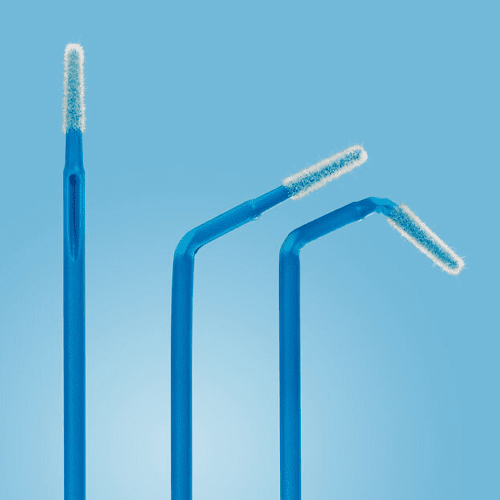
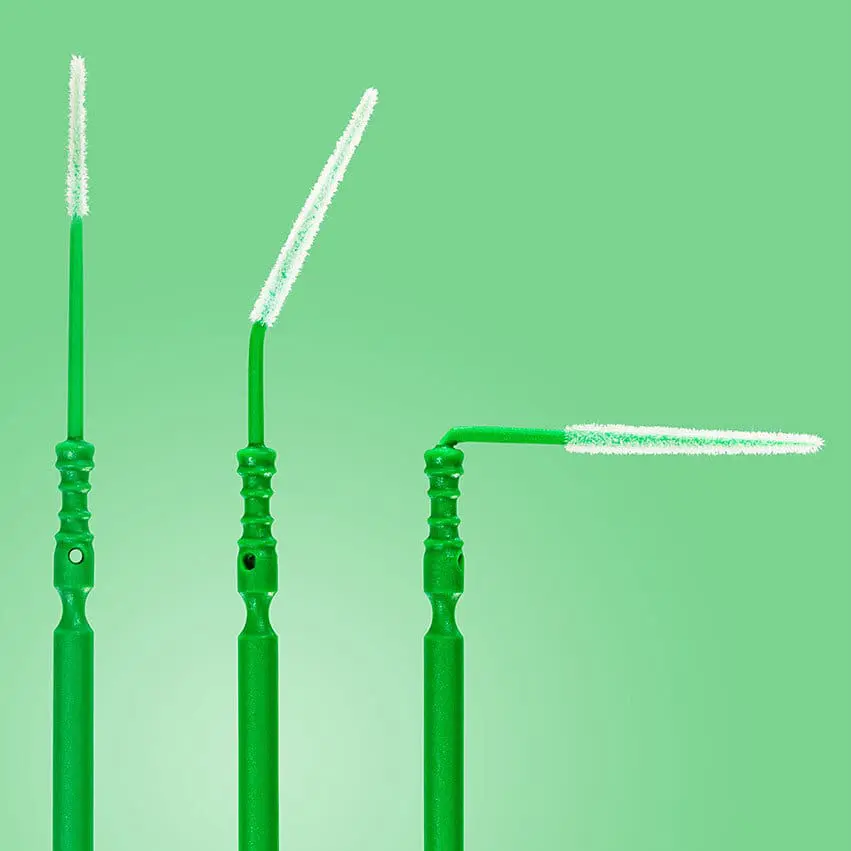
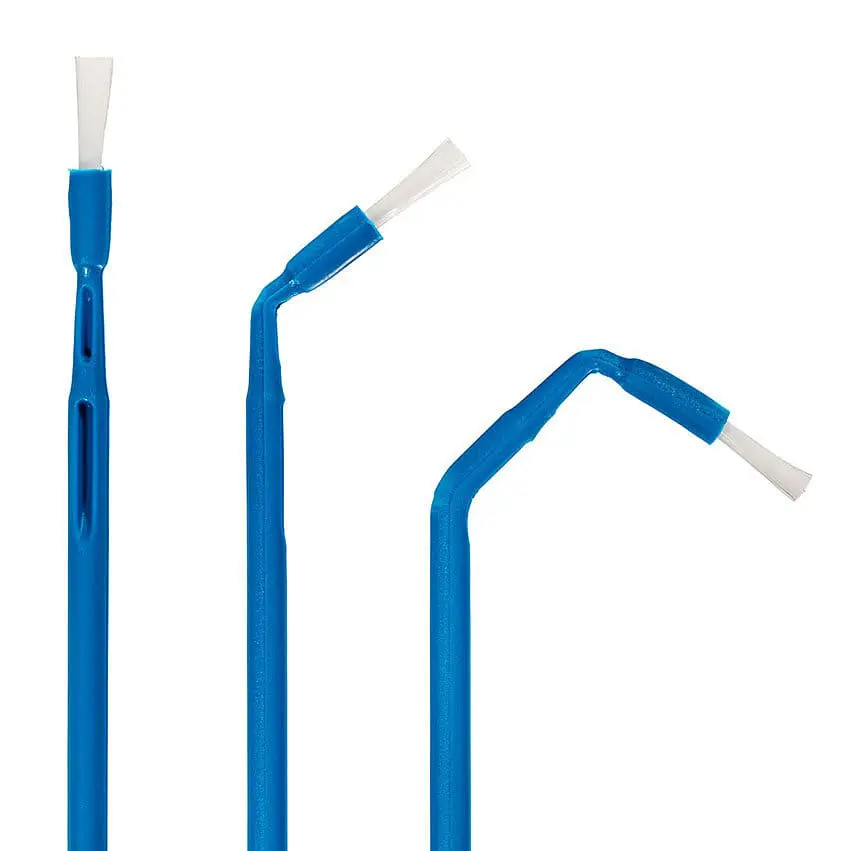
Master-Brush is a double-bending bristle applicator. It is designed with two indentations – one on the handle and one on the neck – to allow the applicator to bend in two separate areas, both independently and simultaneously. This double-bending feature is intended to be useful for applications requiring access from the lingual. Master-Brush is also designed to maintain a constant bent position. In each position the Master-Brush is designed to bend beyond 90 degrees. Master-Brush comes in two sizes: short, black strands (4.8 mm); and long, white strands (7.6 mm). Master-Brush is packaged with 120 applicators in the Easy-Shake hand-held dispenser. This dispenser allows only one applicator at a time to be dispensed, avoiding cross contamination. Master-Brush was evaluated by 22 consultants in over 800 uses. It received an 86% clinical rating.
Product Features
Master-Brush received the highest ratings for its Easy-Shake dispenser and the overall utility of the brushes. The applicators are easy to bend but do exhibit some rebound and occasional breakage. The very fine bristles hold an ample amount of bonding resin. The longer (white) brush was generally more useful and had better access into deep and narrow preparations compared to the one with shorter bristles. Seventy-three percent of consultants reported that Master-Brush was the same as or better than their current brush; 18% would switch to it and 73% would recommend Master-Brush to their colleagues.
Clinical Tips
There are four positions to the Master-Brush: straight; short bend position at the upper end of the neck for most applications; long bend position at the lower end of the neck for hard to reach areas; and the double bend position at both the upper and lower ends of the neck for applications from the lingual side.
Bend the brush and wait for rebound before use.
Use the short brushes for easy cleanup of cement.
Use brushes in the lab for applying die spacer.
Store the dispenser on flat end so brushes do not distort.
Editors’ Note:
According to the manufacturer, the brushes are now made with a tougher plastic to reduce breakage.