Overview
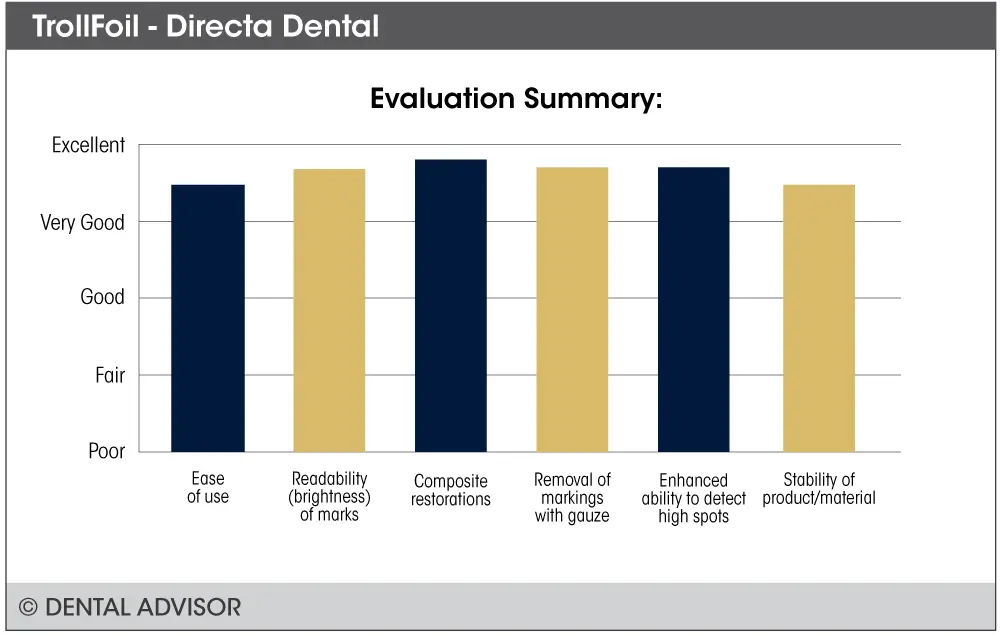
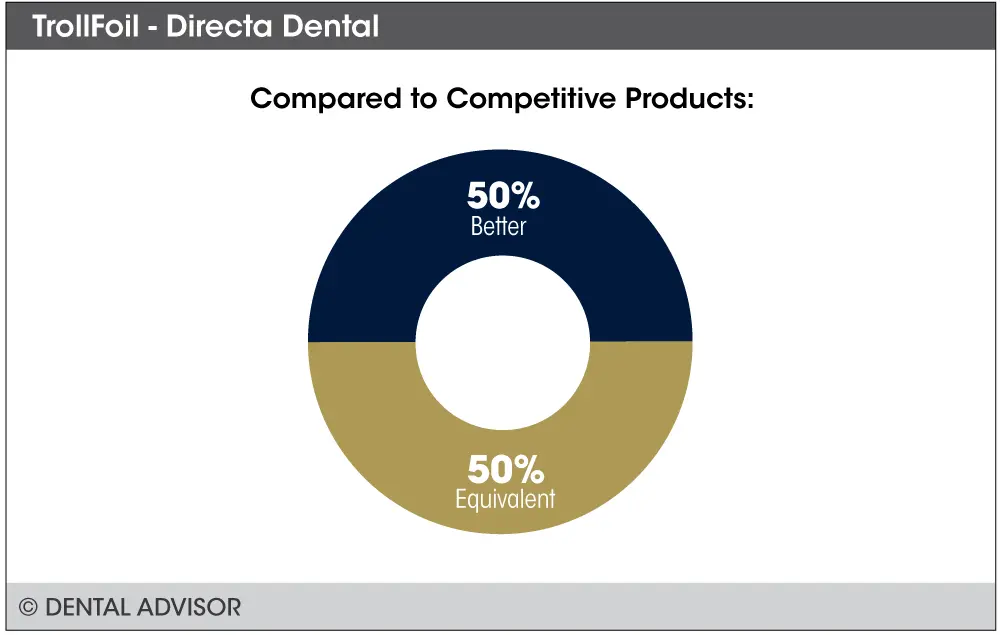
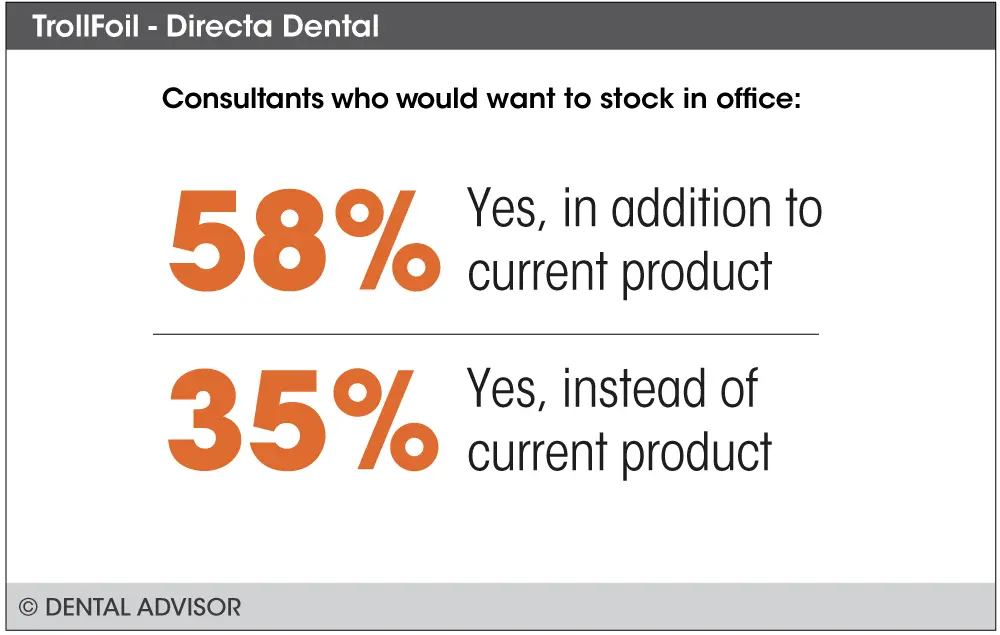
- 26 Clinical Evaluators
- 976 Total Uses
- 96% Clinical Rating
Evaluators’ Comments
- “This is a 10 of 10. The best we’ve tried.”
- “Very thin, so it marks only where the contact points are. It does not tear easily.”
- “It is a necessary product in all offices.”
- “The plastic form makes handling it much easier than loose strips.”
- “The markings are very distinct and easy to read. Point contacts are the clearest I’ve ever seen with any brand of articulating medium.
- “For occlusal equilibrations and adjustments of dental orthotics, I liked it a lot and will continue to use it.”
Description
TrollFoil is a super-thin, double-sided articulating foil designed to provide precise and consistent occlusal markings on wet, dry, and highly polished surfaces. The 8-micron foil is pre-mounted in a semi-rigid frame that keeps it flat and taut, allowing convenient one-handed placement without forceps while preventing ink from transferring to the clinician’s fingers. A removable protective strip supports clean handling, and the thin design is suitable for challenging clinical situations, including limited opening, smooth implant surfaces, gag-sensitive patients, wand metal or nonmetal restorations.
Unique Attributes
- Built-in tab allows placement without articulating forceps.
- Foil material coated with carbon-based color, offering more accurate results.
- Ultra-thin foil provides precise, clearly defined contact markings.
- Produces visible marks on Zirconia, Porcelain, Metal, Composite and other restorative materials.
- Performs on both wet and dry surfaces, with red and blue options for distinguishing occlusal movements.
Clinical Tips from Evaluators
- Dry the tooth surfaces before use to improve the clarity of the markings.
- Use blue foil for centric occlusion and red foil for excursive movements to help identify interferences.
- Have the patient bite firmly, then gently pull the foil through the contact to enhance the markings.
- Make sure the patient’s teeth are biting only on the marking paper and not on the frame holding it together.
Indications
- Checking occlusion on wet or dry teeth
- Use in patients with limited mouth opening
- Marking occlusion on implants with smooth surfaces
- Use with gag-sensitive patients
- Checking contacts on metal and nonmetal restorations