Overview
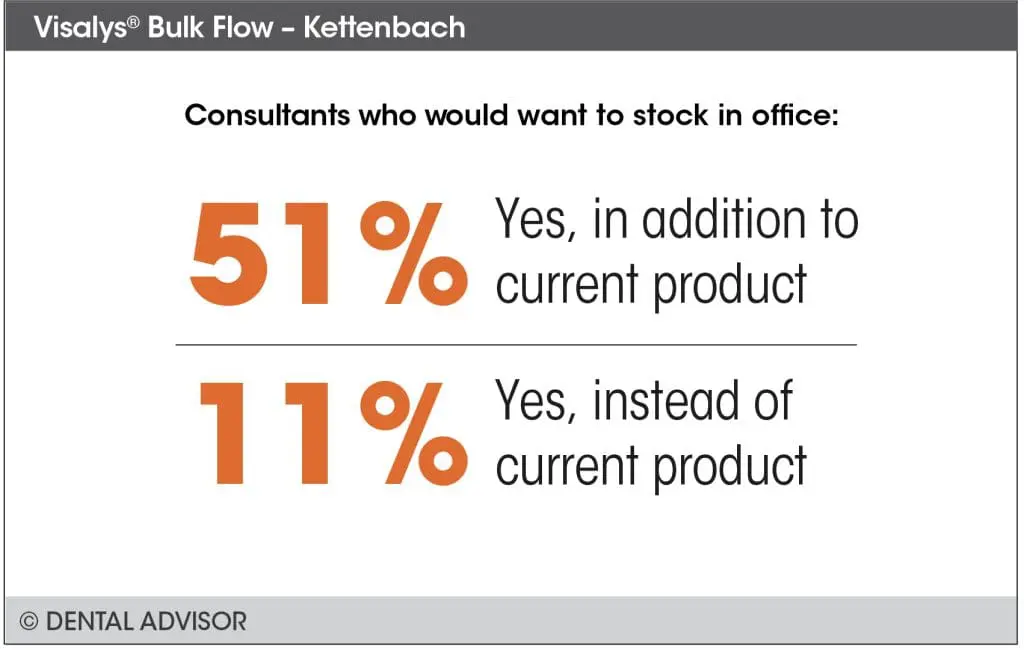
- 35 Clinical Evaluators
- 559 Total Uses
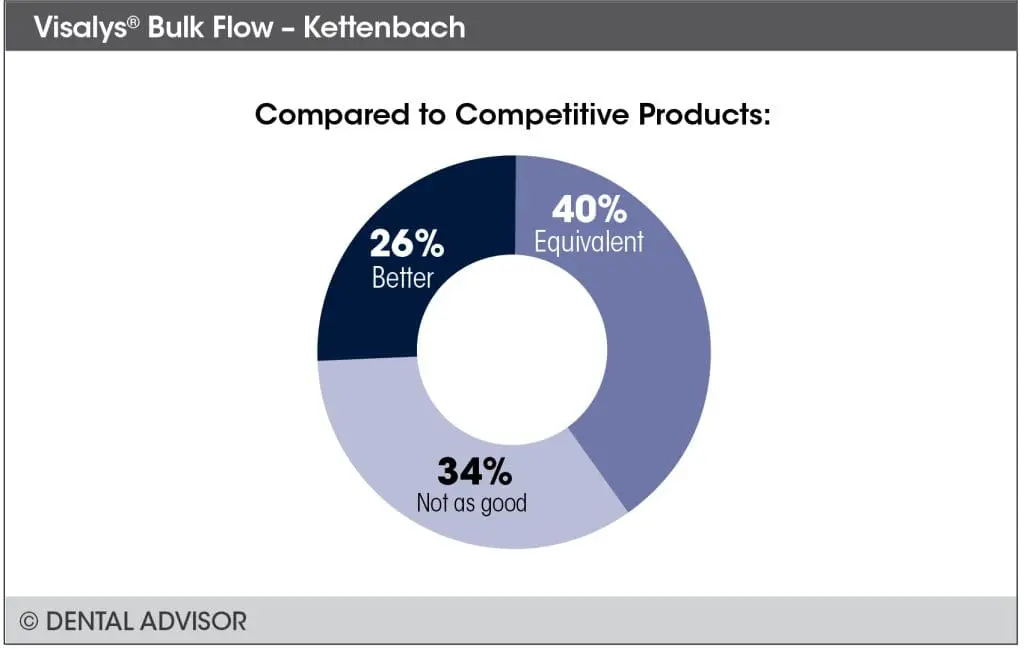
- 86% Clinical Rating
Evaluators’ Comments
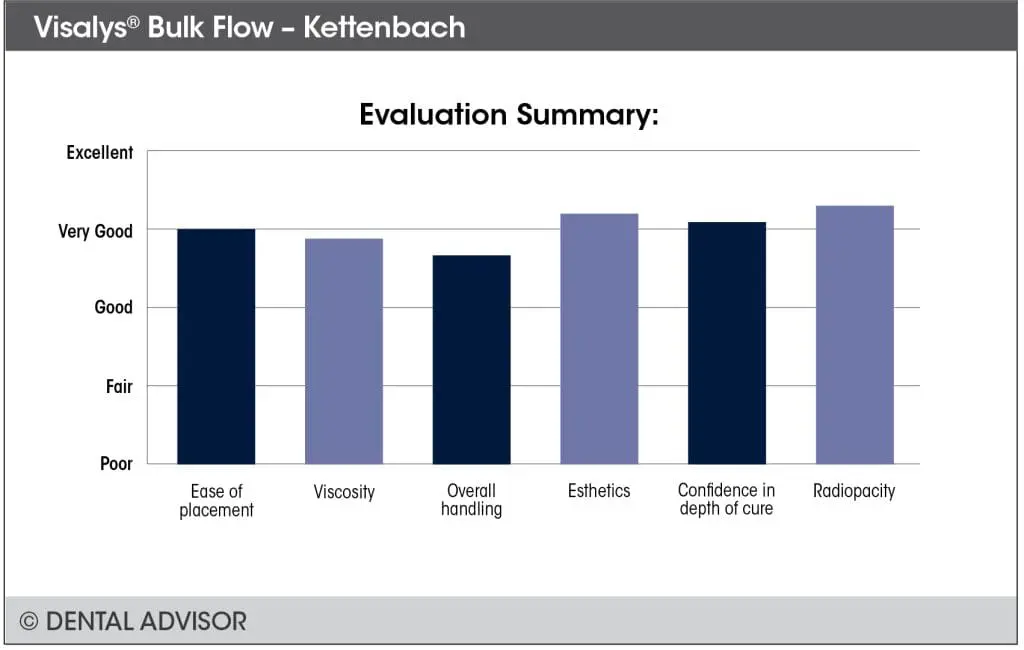
- “The material polished very well, even on visible buccal surfaces.”
- “I felt very confident in the depth of cure, and it worked great for core build-ups.”
- “The compule design with the metal tip gave excellent access and made delivery straightforward.”
- “It was a little too thick, which made it harder to express and required more effort to adapt to the preparation.”
- “Not perfect with color adaptation; the esthetics were lower than I would have liked.”
Description
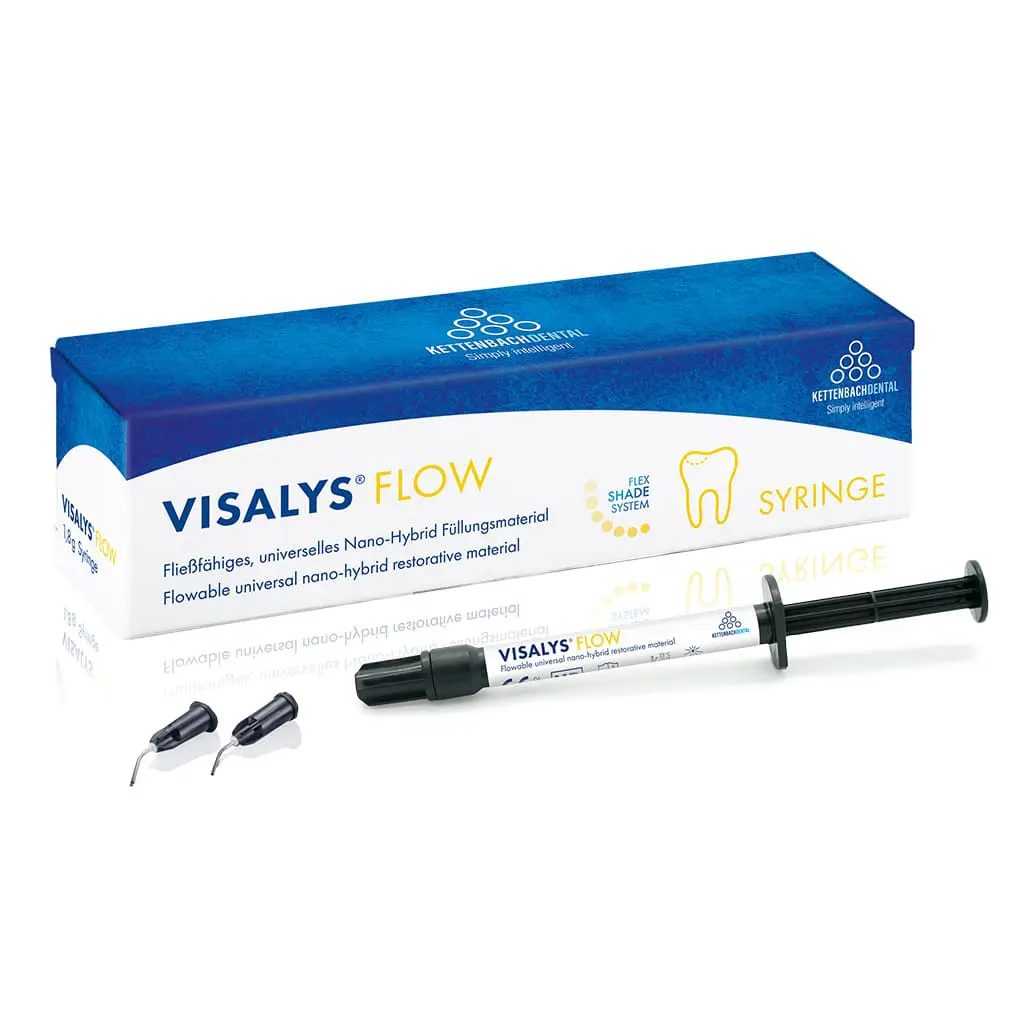
Visalys Bulk Flow is a Bis-GMA–free, single-shade, bulk-fill flowable composite. It can be placed in increments up to 4 mm, without a capping layer, and offers high stability, excellent radiopacity, and low shrinkage. Its chameleon effect and natural fluorescence help the material blend seamlessly with surrounding tooth structure, enhancing esthetics in both posterior and anterior use. Visalys Bulk Flow is available in syringe or compules.
Unique Attributes
- Strong radiopacity with reliable depth of cure, giving clinicians confidence in posterior restorations.
- Thicker, more stackable consistency compared to many bulk-flow materials, offering stability during placement.
- Versatile delivery options, including compules with a long metal tip that improves access to difficult areas.
- Performs well for specific applications such as core build-ups, clear aligner attachments, and deep proximal boxes.
- Single-shade, bulk-fill flowable that can be placed in up to 4 mm increments and no capping layer required.
Clinical Tips
- Use small 2–3 mm increments, especially in deep Class II boxes, to improve adaptation and color blending.
- Avoid overhead light exposure during placement, as the material becomes stickier over time.
- Take additional time expressing the material to ensure it fully adapts to cavity walls; use an instrument to spread it evenly.
- Consider using it in applications such as core build-ups, pulpal floors, and areas where a stable base layer is needed.
- Start flowing the material at the base of the preparation and work upward, overfilling slightly (5–10%) to compensate for minimal slump.
Indications
- Class I and II restorations
- Non-tunneled class III restorations
- Class V restorations
- Core build-ups
- Cavity lining
- Cavity floor elevation
- Blocking out undercuts
- Repair of direct and indirect restorations after appropriate pretreatment