
Consultants’ Comments
- “The guard allowed me to prepare interproximally a lot faster. It also protected the tissue very well, allowing matrix placement with no tissue damage or bleeding.”
- “I liked the ease of gripping and removing the guard on most teeth.”
- “Easy to place and avoid tissue trauma, great contacts, and easy to remove protective metal guard.”
Description
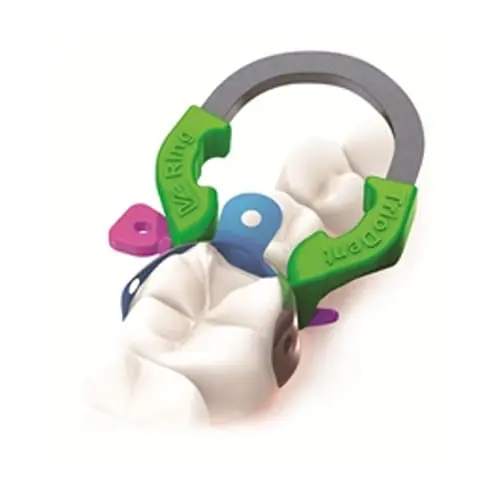
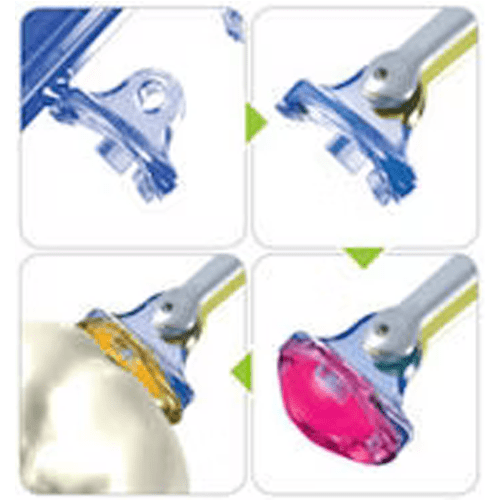
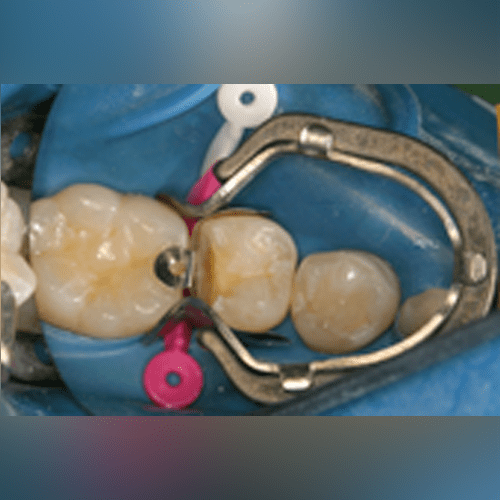
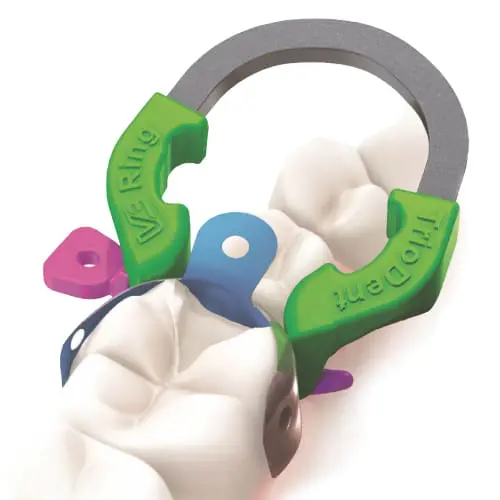
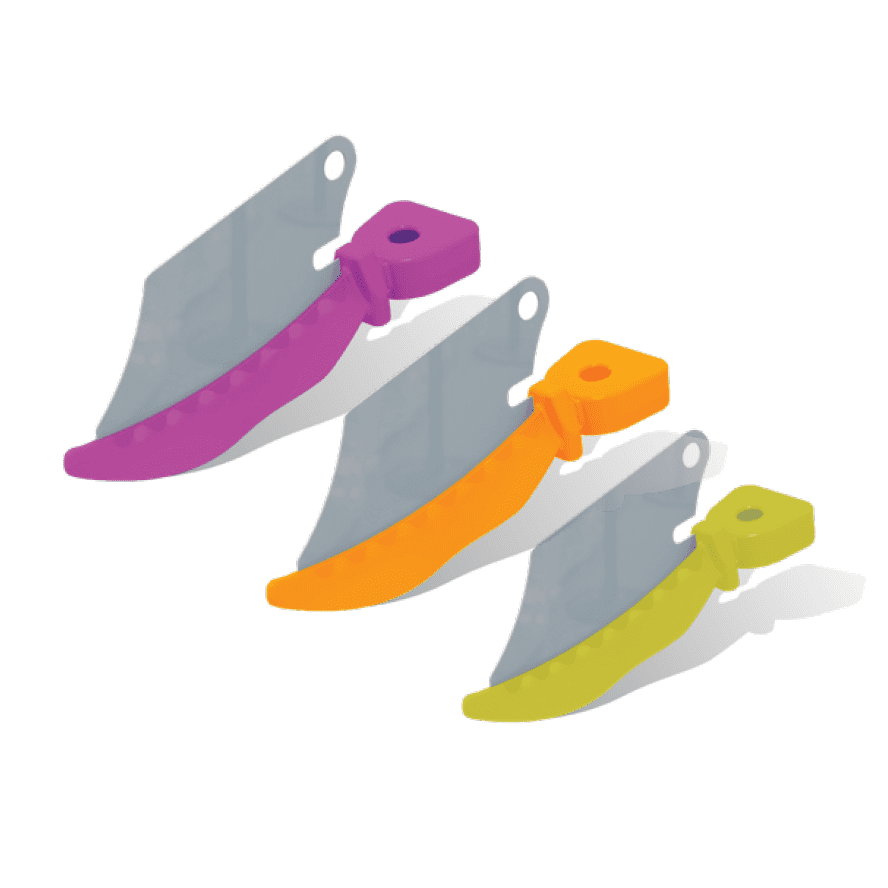
WedgeGuard is a color-coded, two-in-one tooth guard. Its purpose is protection of the tooth and gingiva from iatrogenic damage by a bur during preparation of an adjacent tooth. WedgeGuard is composed of a metal guard attached to a plastic wedge that is intended to be placed prior to tooth preparation. After preparation, the protective guard is detached, leaving the wedge in place to continue restoration. WedgeGuard is designed to provide a cleaner, risk-free work area and save time. The wedge is contoured to promote sealing at the gingival margin. The V-shaped concavity on the underside of the wedge protects the gingival papilla and allows for insertion of another wedge from the opposite side of the embrasure. WedgeGuard is shaped to be self-guiding and self-locating. WedgeGuard can be used during Class II and III restorations, crowns, veneers and tunnel preparations. The kit contains 25 small (white), 25 medium (pink), and 25 large (purple) WedgeGuards in a re-closable storage container with manufacturer’s instructions. WedgeGuard was evaluated by 22 consultants in 571 uses. It received an 88% rating.
Product Features
Consultants reported that WedgeGuard was easy to place, especially when using the pin-tweezers that are recommended. It effectively protected adjacent teeth and soft tissues from trauma during cavity preparation. Several consultants reported that it saved time during cavity preparation. Instructors in academic settings were particularly enthusiastic about WedgeGuard. Forty-one percent of consultants reported that WedgeGuard was better than their current method of protecting adjacent surfaces and 27% reported that it was equivalent. Fifty percent would switch to WedgeGuard and 82% would recommend it.
Clinical Tips
Place wedge from the buccal aspect if the lingual tissue is not anesthetized.
Trim the top part of the guard with the bur if necessary for better occlusal view and access.